


What is the difference between Endolifting and Facelift?
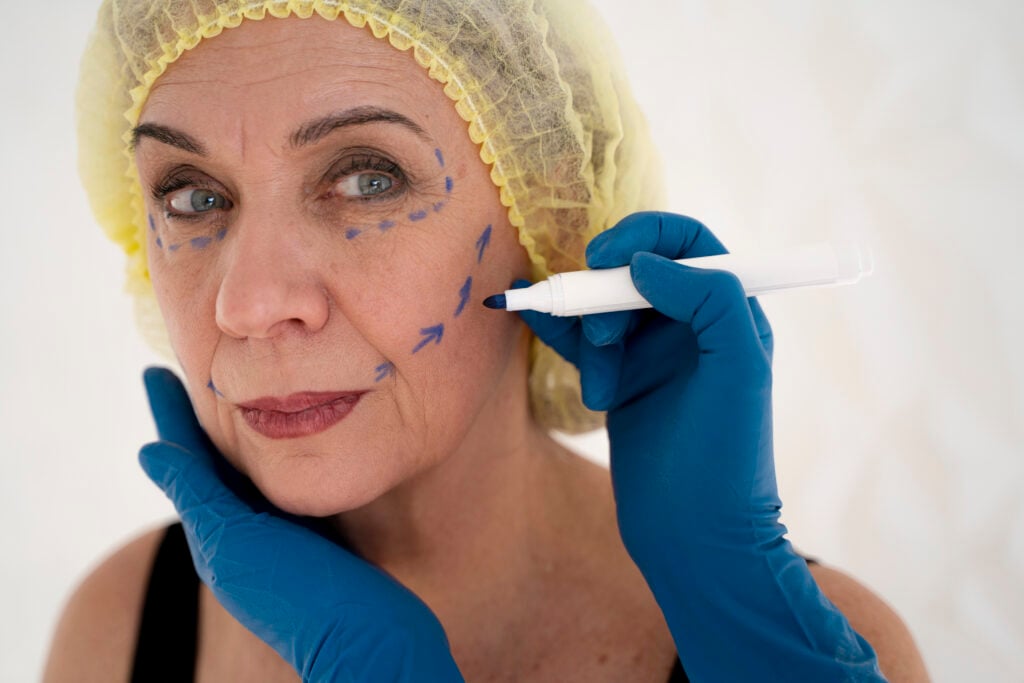
As we age, our skin loses firmness and elasticity, leading to the appearance of wrinkles and facial sagging. To combat these signs of aging, there are various treatment options available, including Endolifting and the facelift. Both procedures aim to improve the appearance of the face, but they differ considerably in terms of technique, duration of results, and recovery time.
In this article, we explore the differences between Endolifting and facelift surgery to help you decide which treatment is best suited to your aesthetic needs.
What is Endolifting?
Endolifting is a non-surgical treatment that uses a fibre-optic laser to tighten the skin from within. The procedure is performed through small incisions, through which the laser is introduced into the dermis. The laser stimulates collagen production and tightens the skin, achieving a lifting effect without surgery. It is ideal for those who wish to improve facial elasticity and firmness without undergoing an invasive procedure.
Benefits of Endolifting:
- Non-surgical: Less invasive than a facelift.
- Natural-looking results: Stimulates the skin from within to achieve a rejuvenated appearance without drastic changes.
- Fast recovery: Minimal downtime, allowing a quick return to daily activities.
What is a facelift?
A facelift, also known as a rhytidectomy, is a surgical procedure that involves the removal of excess skin and the repositioning of facial tissues to tighten and smooth the face. This procedure is more invasive than Endolifting and offers more long-lasting and noticeable results.
During surgery, incisions are made in discreet areas, such as around the ears, to avoid visible scarring. This type of lift can treat advanced sagging in the face and neck, considerably improving facial appearance.
Benefits of a facelift:
- Long-lasting results: Surgical facelift offers long-term results, with visible effects lasting more than 10 years.
- Significant correction: Ideal for correcting severe sagging and deep wrinkles.
- Improved facial contours: Reshapes areas such as the neck, cheeks, and jawline.
Key differences between Endolifting and facelift
Although both procedures aim to rejuvenate the face, there are several key differences between Endolifting and a facelift.
| Feature | Endolifting | Facelift |
|---|---|---|
| Type of treatment | Non-surgical, fibre-optic laser | Surgical, skin and deep tissue repositioning |
| Duration of results | 6–12 months | More than 10 years |
| Recovery time | Fast (1–2 days) | Long (2–4 weeks) |
| Invasiveness | Minimal, no large incisions | High, requires surgery and anaesthesia |
| Visible effect | Gradual, subtle | Immediate and noticeable |
| Ideal for | Mild to moderate sagging | Advanced sagging and deep wrinkles |
Which procedure is right for you?
The choice between Endolifting and a facelift depends on several factors, including the degree of facial sagging, your expected results, and how much time you are willing to dedicate to recovery.
- Endolifting: If you have mild to moderate skin sagging, Endolifting may be the ideal option. It is perfect if you are looking for a gradual improvement in skin firmness and prefer to avoid surgery. It is also suitable for those who want a less invasive option with minimal downtime.
- Facelift: If you have severe sagging or deep wrinkles that cannot be adequately treated with non-surgical techniques, the deep plane facelift is the most effective procedure. It delivers more dramatic and permanent results, making it the preferred choice for those seeking a more evident transformation.
Results and duration of both treatments
- Endolifting: Results can last between 6 and 12 months, depending on your skin type and aftercare. Although not as long-lasting as surgical facelift, it remains an excellent option for maintaining a younger-looking face without invasive surgery.
- Facelift: Surgical facelift offers more permanent results, with effects lasting more than 10 years. It is especially suitable for those with advanced sagging. You can learn more about all the benefits of a facelift to assess whether it is the right option for you.
Recovery: which is faster?
One of the most notable benefits of Endolifting is its recovery time. Most people can return to their daily activities within 1–2 days, with only mild temporary redness or swelling.
A facelift, on the other hand, requires a longer recovery period. If you want to know what to expect after the procedure, we explain it in detail in our guide on recovery after a deep plane or endoscopic facelift. Most patients need 2–4 weeks to recover fully.
Comparing the cost of Endolifting and facelift
Endolifting is generally more affordable than a facelift. The costs are lower due to the lesser complexity of the procedure, the absence of general anaesthesia, and the shorter intervention time.
Surgical facelift tends to be more expensive due to invasive surgery, general anaesthesia, and hospitalisation time, if required. If you are looking for a less invasive alternative to a full facelift, a mini facelift may be an intermediate option worth considering.
Frequently asked questions about Endolifting vs Facelift
What is Endolifting and how does it differ from a facelift?
Endolifting is a non-surgical procedure that uses a fibre-optic laser to tighten the skin and stimulate collagen production from within. It is performed through small incisions through which the laser is introduced, enabling effective facial rejuvenation without the need for surgery.
A facelift, by contrast, is a surgical procedure in which an incision is made in the face to remove excess skin and reposition sagging facial tissues. The key difference is that a facelift requires invasive surgery, whereas Endolifting is a less invasive technique with a much shorter recovery time.
Main differences:
- Endolifting: Non-surgical, uses laser to tighten the skin.
- Facelift: Surgical, repositions tissues and removes excess skin.
Which of the two procedures is most suitable for my case?
The choice between Endolifting and a facelift depends on the severity of sagging and the results you wish to achieve:
- Endolifting: Ideal for mild sagging, as it is less invasive and has a fast recovery time. It is perfect for those seeking a gradual improvement in skin firmness without the risks associated with surgery.
- Facelift: More suitable if you have moderate or severe sagging, or deep wrinkles that cannot be adequately treated with non-invasive methods. There are different facelift techniques that can be adapted to each case and degree of aging.
Is Endolifting safer than a facelift?
Both procedures are safe when performed by a qualified professional.
How long do the effects of Endolifting last compared to a facelift?
- Endolifting: Results typically last between 6 and 12 months. Although not as long-lasting as a facelift, Endolifting can improve skin elasticity and provide a medium-term lifting effect.
- Facelift: Surgical facelift offers more durable results, lasting more than 10 years depending on factors such as skincare and natural aging. To learn exactly what this procedure involves, you can read our article on what is a facelift.
What is the recovery like after Endolifting compared to a facelift?
Recovery from Endolifting is significantly faster than from a facelift:
- Endolifting: Most people can return to their normal activities within 24–48 hours. The recovery process is generally painless, although some temporary redness or swelling may occur.
- Facelift: Requires a longer recovery period, generally 2 to 4 weeks. Patients may experience pain, bruising, and swelling during the first few days. You can find more information in our guide on facelift recovery.
What results can I expect from each procedure?
- Endolifting: Results are gradual. Patients will see an improvement in skin firmness and tone, but the effects are more subtle compared to surgical facelift.
- Facelift: Provides more dramatic and long-lasting results, removing excess skin and tightening the facial muscles. The effects are especially noticeable in people with advanced sagging.
What is the cost of Endolifting compared to a facelift?
In terms of cost, Endolifting is usually more affordable than a facelift, as it does not require surgery or general anaesthesia and the procedure is faster. The cost of both treatments may vary depending on the professional, the clinic, and the location.
Can I combine Endolifting and a facelift?
In some cases, professionals may recommend combining procedures to optimise results. For example, following a deep plane facelift, it can be complemented with Endolifting in more delicate areas where the facelift results are less pronounced, such as around the eyes or the neck.
This can offer a comprehensive solution for facial rejuvenation, combining the long-term efficacy of surgical facelift with the subtlety of Endolifting.
About the author
Dr. Ahmad Saad
Medical Director – IMAGN Institute, Barcelona
Schedule a consultation
Reach out to our Patient Coordinator any time via e-mail, phone +34 933 821 111, or online form